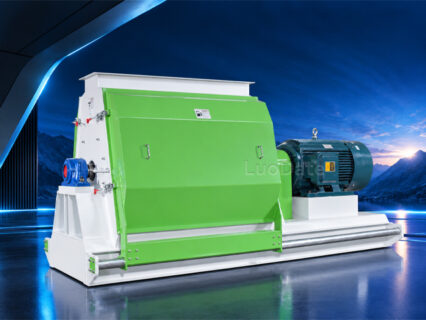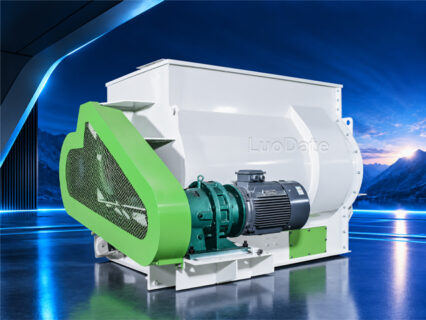
Product Introduction
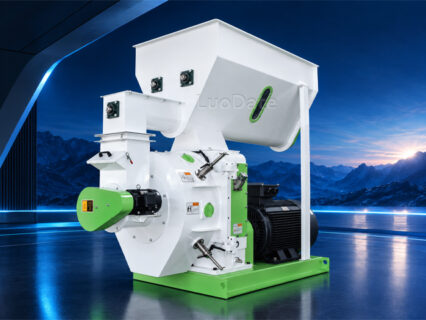
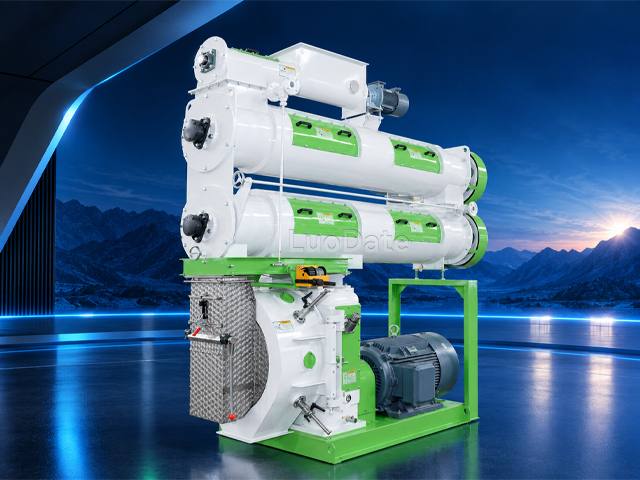
The Livestock Feed Making Machine is designed to convert prepared feed mixtures into pellets for livestock feeding applications. During operation, material is compressed through a ring die and formed into pellets, providing a defined product format for subsequent handling and distribution.
For livestock feed manufacturers, selecting suitable pelletizing equipment involves more than choosing a machine by capacity alone. Material characteristics, target pellet dimensions, processing conditions, and the requirements of the intended feed product all need to be considered.
Luodate Machinery offers livestock feed pelletizing equipment for agricultural businesses and commercial feed processors. The machine configuration can be evaluated according to the intended livestock application, production targets, and site conditions, helping customers identify equipment that fits their specific processing requirements.
Product Advantages
Technical Parameter
| Model | Power (kw) | Power of feeder (kw) | Power of conditioner(kw) | Inner diameter of ring die (mm) | Pellet size (mm) | Capacity(t/h) |
|---|---|---|---|---|---|---|
| SZLH 320 | 45 | 1.1 | 2.2×3 | 320 | 1-6 | 2-3 |
| SZLH 350 | 55 | 1.5 | 3×3 | 350 | 1-6 | 2-7 |
| SZLH 400 | 75/90 | 1.5 | 5.5×3 | 400 | 1-6 | 4-11 |
| SZLH 420 | 90/110 | 1.5 | 5.5×3 | 420 | 1-6 | 5-12 |
| SZLH 508 | 132/160 | 2.2 | 7.5×3 | 508 | 1-6 | 7-15 |
| SZLH 678 | 185/200 | 2.2 | 11×3 | 678 | 1-6 | 9-25 |
| SZLH 768 | 280/315 | 2.2 | 15×3 | 768 | 1-6 | 15-28 |
Production Process
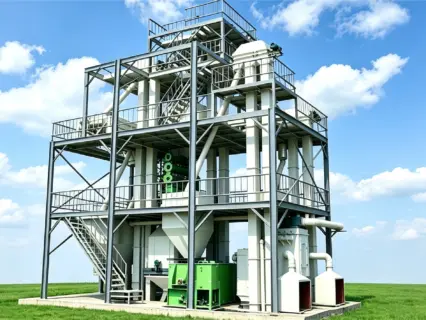
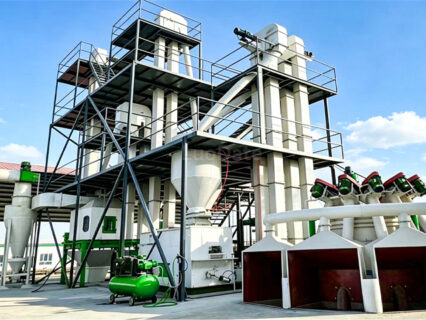
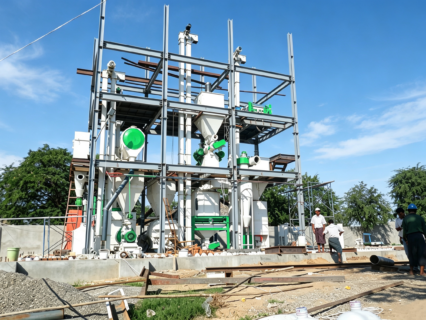
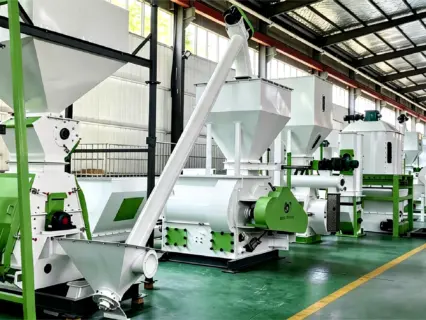
A typical livestock feed production process includes raw material cleaning, grinding, batching, mixing, conditioning where required, pelletizing, cooling, screening, and packaging. The Livestock Feed Making Machine serves as the central pelletizing unit, compressing the prepared feed mixture through a ring die to form pellets according to the required specifications. Proper coordination between material preparation and pelletizing helps support a consistent process. After forming, the pellets proceed to suitable cooling and screening stages before storage or packaging. The final workflow depends on the feed application, production capacity, and selected equipment configuration.
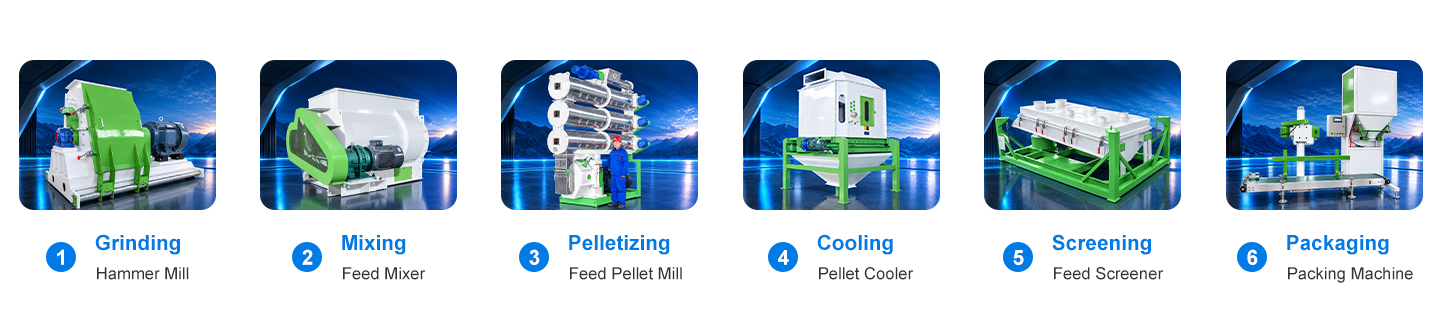
It can serve different livestock feed applications when the machine configuration and processing conditions are suitable for the intended product. Before selecting equipment, clarify the feed application, required pellet specifications, and material characteristics so that the appropriate model can be evaluated.
The prepared mixture may be transferred from a mixer to the pelletizing machine when the feeding arrangement and material condition are suitable. Depending on the process, additional conditioning or other preparation may be required. The transfer method should be confirmed as part of the equipment layout.
Start with the desired hourly output and the number of operating hours planned per day. Then consider the target pellet dimensions, material characteristics, and expected production schedule. The selected machine should be evaluated against these factors rather than nominal capacity alone.
Consider the material flow from receiving and preparation through pelletizing and finished-product handling. Available floor space, equipment placement, operator access, utility requirements, and the capacity of connected machines all affect the overall layout. Planning these elements together helps create a more coordinated working environment.
Machine selection can take the intended pellet diameter, approximate length, required output, and material characteristics into account. Compatible ring die specifications and available operating adjustments should be confirmed with the supplier before ordering.
Useful information includes the intended livestock feed application, target hourly output, required pellet dimensions, material characteristics, available power supply, and installation conditions. If the machine will connect to existing equipment, details of the current processing arrangement can also help determine compatibility.
Thank you for your interest in LUODATE Machinery. If you want to learn more about our Feed Machine and Biomass Machine,
Contact us Now to find out what we can do for you next project !