LUODATE · ANIMAL FEED ENGINEERING
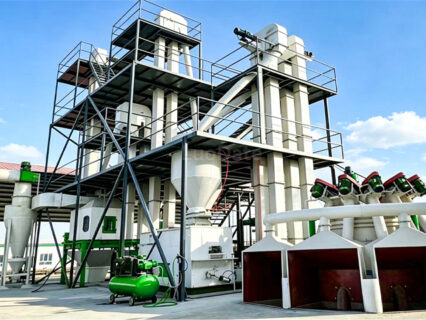
A 25–40 t/h plant is designed around coordinated production and logistics. A preliminary layout should quantify receiving by delivery window, batch cycle time, pellet-branch capacity, cooling duty and peak dispatch before any major machine is selected.

High-volume animal feed manufacturers planning multiple shifts, automated batching and bulk ingredient handling.
Capacity means metric tonnes of finished feed per operating hour. Agree the ingredient mix, pellet specification and acceptance conditions before choosing equipment.
Receiving → cleaning → grinding → batching and mixing → steam conditioning → pelletizing → cooling → screening → packing or bulk loadout
Batching and grinding order can vary by design. Specify any mash bypass, crumbling or liquid addition when planning the process.
| Section | Design considerations |
|---|---|
| Receiving and distribution | Draw truck movements from weighbridge to intake, cleaning, silos and exits. Design intake for unloading windows and consider buffer storage for irregular arrivals. |
| Central batching and parallel lines | Compare centralized weighing and mixing with separate circuits where production schedules call for segregation. Model shared conveying and micro-ingredient dosing. |
| Steam, pelleting and cooling | Compare parallel ring-die routes using the recipe mix. Confirm steam demand, boiler and condensate interfaces, cooler capacity and airflow under site conditions. |
| Dispatch and production records | Map bagged and bulk loadout, pallet staging and batch identity. Determine access for lifting wear parts and maintaining shared equipment. |
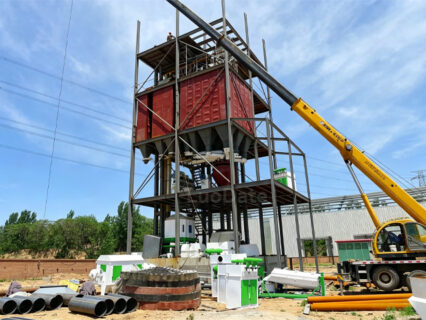
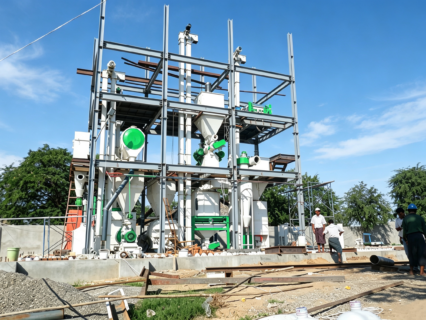
The 40 t/h Sudan item describes a shipped project. Use it as a dispatch and logistics example. An annual forecast should come from scheduled production hours, utilization and product mix.
The 25–40 t/h line has a planning reference of US$500,000–800,000 for equipment investment. This is a budgeting range. The final price depends on project scope, equipment selection, automation and the feed formulation.
Confirm which supplier covers freight, duties, civil works, electrical and steam utilities, installation and commissioning. See the equipment investment guide for all seven capacity bands.
Compare both options against formula throughput, SKU changeovers, scheduled maintenance and the residual capacity when a key machine is unavailable.
Building structure, storage days, automation, steam and electrical integration, number of pellet routes, and packaging or bulk dispatch scope can all shift the project cost.
Daily intake and dispatch profiles, ingredient-bin schedule, site and logistics drawings, recipe matrix, power and steam interfaces, planned shifts and acceptance criteria.
Send LUODATE your project requirementsCompare capacities
1–2 t/h · 3–4 t/h · 5–7 t/h · 8–10 t/h · 12–20 t/h · 50 t/h · Cost guide
Thank you for your interest in LUODATE Machinery. If you want to learn more about our Feed Machine and Biomass Machine,
Contact us Now to find out what we can do for you next project !