LUODATE · ANIMAL FEED ENGINEERING
A 3–4 t/h line gives a growing feed business more output while remaining manageable with a single pelleting route. It suits producers who need several formula batches per shift and want to move gradually from manual weighing and bagging to semi-automatic operation.

Growing poultry and livestock feed operations with recurring production runs and bagged dispatch.
Capacity means metric tonnes of finished feed per operating hour. Agree the ingredient mix, pellet specification and acceptance conditions before choosing equipment.
Receiving → cleaning → grinding → batching and mixing → steam conditioning → pelletizing → cooling → screening → packing or bulk loadout
Batching and grinding order can vary by design. Specify any mash bypass, crumbling or liquid addition when planning the process.
| Section | Design considerations |
|---|---|
| Receiving and grinding | Separate ingredients that need grinding from meals already at the target particle size. Plan bin locations and transfer routing so a full grinder does not stop all receiving. |
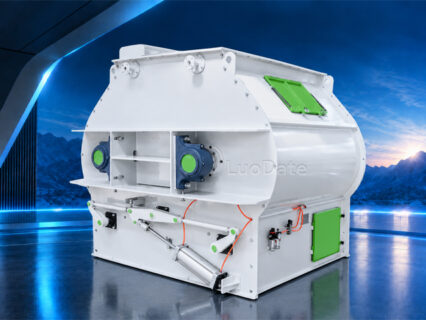
| Batch scale and mixer | Size batching and mixing to the complete cycle: dosing, loading, mixing and discharge. Include a buffer bin so the mill can keep running between batches. |
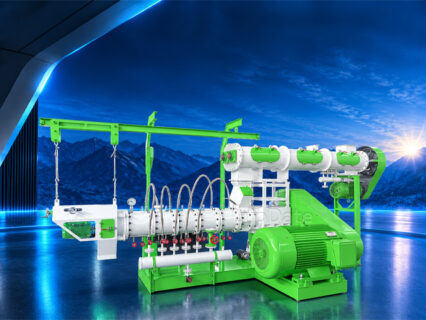
| Ring-die pelleting | Select against the formula that pellets most slowly. Confirm steam, die and roller access, and a practical procedure for switching between pellet sizes. |
| Cooling, screening and packing | Match cooling and screening to the net rate after fines. Allow for bag changes, weighing and staging so the packer can keep up. |
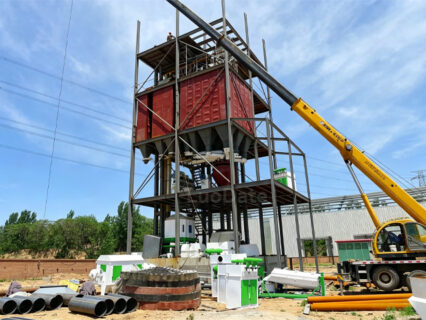
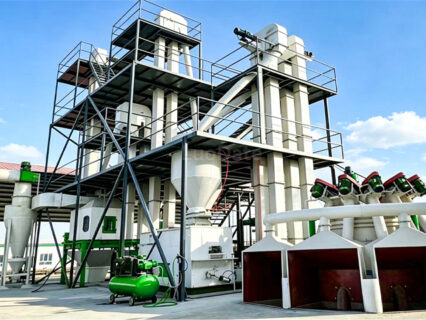
For an existing low workshop, compare a horizontal layout with a taller gravity-fed arrangement. Use the site drawing to compare conveyor count, access to screens and dies, and where raw materials and finished bags will cross.
The 3–4 t/h line has a planning reference of US$60,000–180,000 for equipment investment. This is a budgeting range. The final price depends on project scope, equipment selection, automation and the feed formulation.
Confirm which supplier covers freight, duties, civil works, electrical and steam utilities, installation and commissioning. See the equipment investment guide for all seven capacity bands.
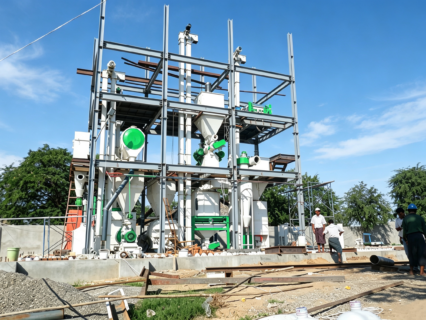
No. The Indonesia example documents a 3 t/h configuration; the upper end of the planning band depends on the selected ingredients, pellet size, equipment and acceptance-test conditions.
Formula list, grinder screen target, daily changeovers, utility capacity, building length and height, packing speeds and target sales volume.
Send LUODATE your project requirementsCompare capacities
1–2 t/h · 5–7 t/h · 8–10 t/h · 12–20 t/h · 25–40 t/h · 50 t/h · Cost guide
Thank you for your interest in LUODATE Machinery. If you want to learn more about our Feed Machine and Biomass Machine,
Contact us Now to find out what we can do for you next project !